
The customer
The client is a prominent distributor of chemicals and various industrial commodities in emerging markets. With a broad global footprint across multiple regions, they have built strong infrastructure and expertise. Their end-to-end commercial, supply chain, and financing solutions deliver a competitive edge to customers across diverse industries.
The context
The organization faced limitations in their existing data management processes, lacking a centralized, scalable, and governance-driven platform to support their digital transformation. The absence of a unified domain-driven architecture led to inconsistencies in data quality, accessibility, and reporting capabilities. Manual ingestion, transformation, and quality processes hindered efficiency and scalability, while governance and lifecycle management were not sustainable. Data access was not user-friendly or secure, lacking role-based and row-level security measures.
“With the new platform, we now have secure, scalable, and reliable access to data—enabling faster, more confident decision-making across the organization.”
The solution
To address these challenges, the company implemented a robust and scalable data platform built on Microsoft Fabric. Key components of the solution included:
- Centralizing and standardizing data streams through a unified architecture.
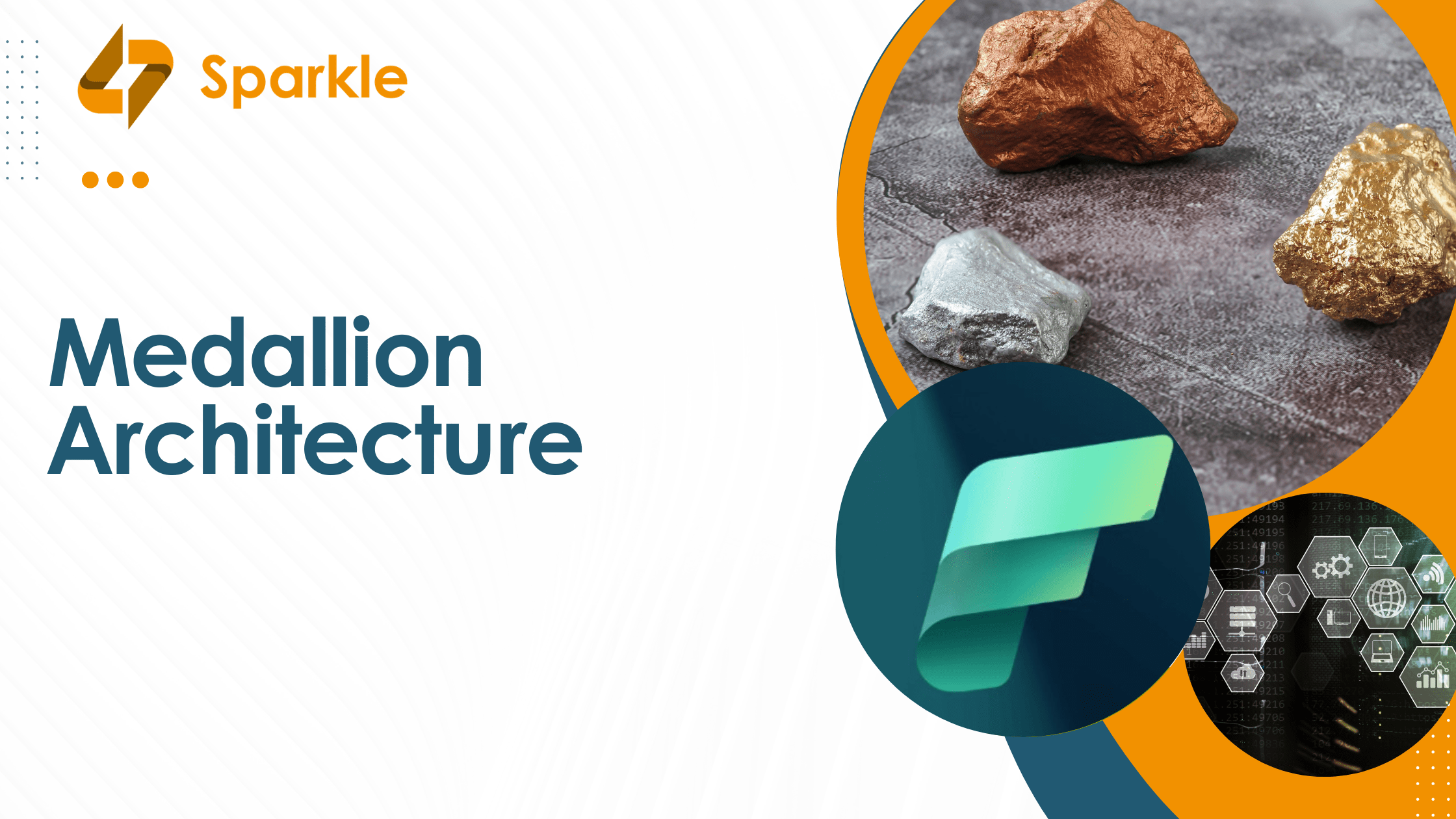
- Developing a domain-driven medallion architecture (bronze, silver, gold layers) with Data Vault modeling.
- Automating infrastructure setup and ingestion pipelines using Azure DevOps for CI/CD and version control.
- Enhancing transformation processes with dbt and securing access through Entra ID integration.
- Deploying a semantic layer for efficient data consumption using Power BI.
The impact
The new platform delivered significant improvements, including:
- A scalable, governance-driven foundation to support digital transformation.
- Enhanced data quality and accessibility, empowering business users with timely and reliable insights.
- Secure and user-friendly data access through role-based and row-level security controls.
With these improvements, the organization is now well-equipped to make data-driven decisions with confidence, agility, and security.
Explore our Fabric packages – Microsoft FabricIgnite Packs | Sparkle
ABOUT THE AUTHORS
Christof Steyaert
Managing Partner BE-Flanders
Discover more content from our blog

Connecting the Dots: Neo4j Graph Intelligence Inside Microsoft Fabric
Microsoft Fabric unifies data engineering, analytics, and AI across the Microsoft ecosystem.
But many business problems like fraud detection, customer 360, supply-chain optimization, … depend not on single data points, but on how those points connect.
Microsoft Fabric Ideation Session
The Microsoft Fabric Ideation Session helps organizations move from curiosity to clarity. In just three hours, our experts guide your team through Fabric’s AI and analytics capabilities to identify high-impact use cases, connect business goals with technology, and build a practical roadmap for value-driven transformation.

Exploring Microsoft Fabric: Workshop at Tallinn Data Week
Discover the power of Microsoft Fabric for unified analytics. Learn how to combine data integration, data science, real-time analytics, and business intelligence in a single platform.

From Data Chaos to AI-Readiness: Sparkle’s Adaptive Data Management Framework
Every company today wants to harness the power of AI. From copilots that accelerate daily work to generative models that reveal new opportunities, AI promises to transform how businesses operate. But there’s one constant truth: AI is only as good as the data it consumes.

Microsoft Fabric: From Reporting to AI-driven operations
Microsoft Fabric unifies data, analytics, and AI on a single platform, simplifying management and enabling real-time, AI-driven insights. Organizations can move from reporting to automated processes, unlocking efficiency, predictive insights, and smarter business decisions. Planning the transition now ensures a smooth, cost-effective adoption.

Power Bi Input Methods in Microsoft Fabric: Use Cases and Technical Solutions
Organizations using Microsoft Fabric with Power BI increasingly need ways to capture user input, not just analyze existing data. Until recently, the main native options were Power BI custom visuals and Power Apps. Since May 2025, a third option- Fabric Translytical Flows- has become available. This tutorial compares these three approaches to help you choose the right solution for your scenario.